
Greene’s songs (correspondence)
Issue 102, May 2025
MIKE HILL
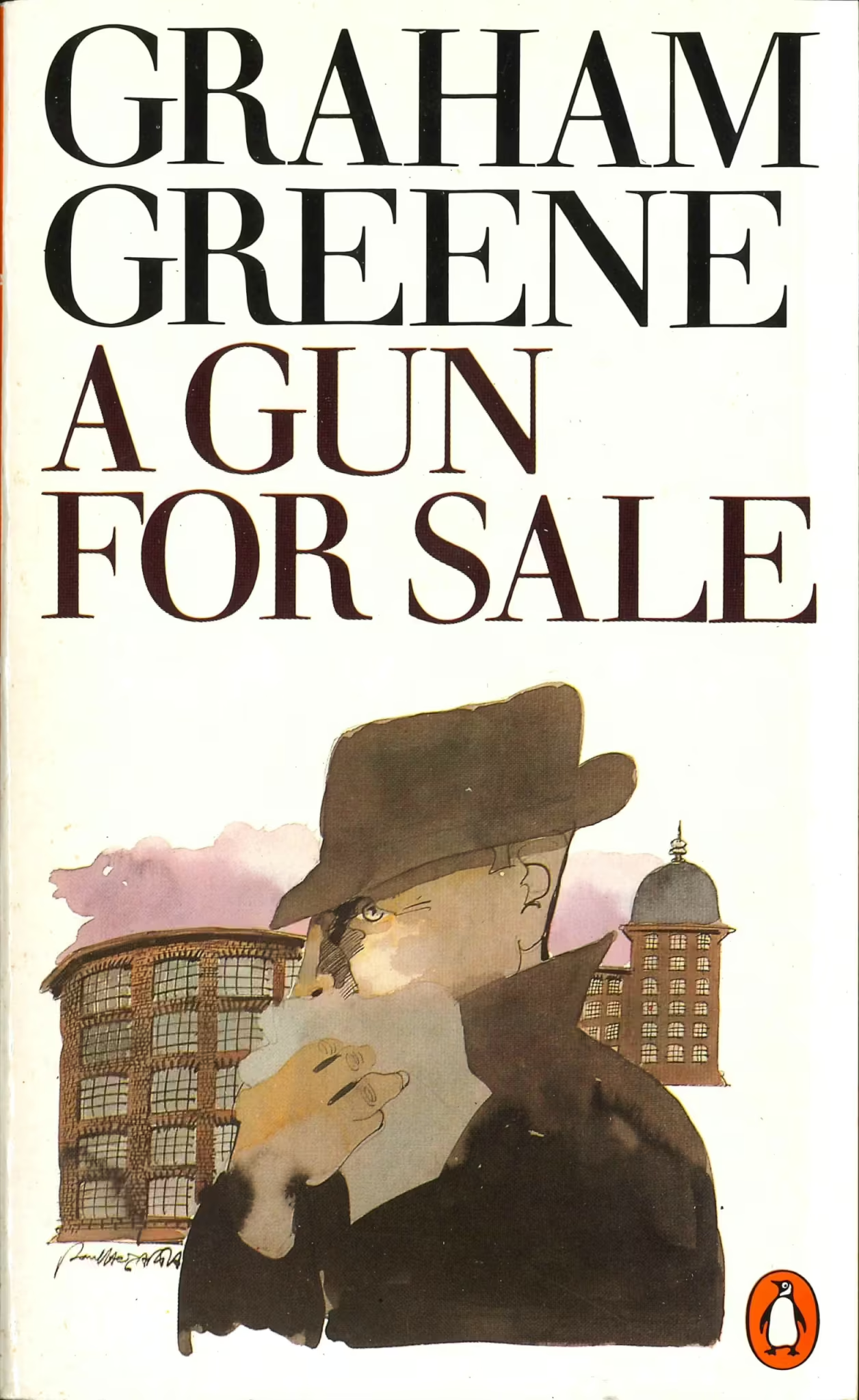
In Greene’s 1936 novel A Gun for Sale there is a snatch of song lyric, as follows:
It’s only Kew,
to you,
but to me
it’s Paradise …
They are just blue
petunias to you,
but to me
they are your eyes …
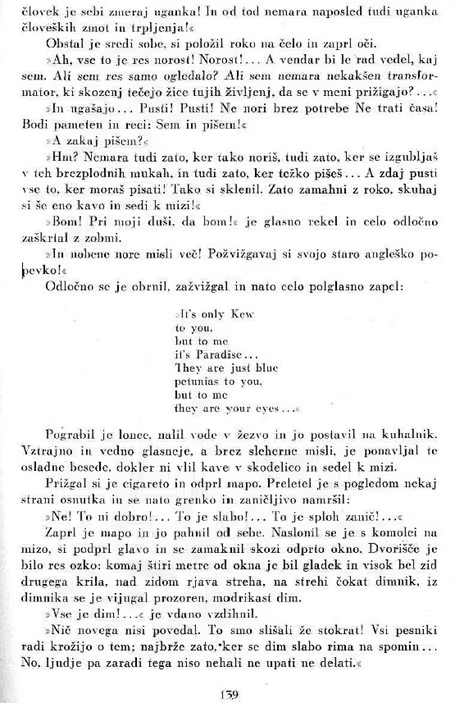
Where did the song come from? The question was raised in an email from Andraž Gombač, who is an editor at the Slovenian publishing house Beletrina. Andraž gave the background to his query: ‘These days I’m dealing with one of the best Slovenian novels Balada o trobenti in oblaku (‘The Ballad of the Trumpet and the Cloud’). Ciril Kosmač wrote it back in 1956/57 and published it in the literary magazine Naša sodobnost. It was first published as a book in 1964, and now we’re going to publish the first, longer edition, for the first time in a book. His [Kosmač’s] alter ego is singing ‘an old English song’ to himself in the novel, and he claims he heard it in London during WWII, where Kosmač was actually a political refugee.’ The ‘old English song’ is the lyric quoted above, and in researching where it came from, Andraž had come across Greene’s 1936 novel. So, where had Greene got the lyric from?
My answer to Andraž’s query was as follows:
I’m pretty certain that the lines of the ‘old English song’ were actually made up by Greene himself – something he did in a few of his novels. When interviewed by Anthony Burgess in 1980, Greene said, ‘I may not be musical but I’ve written popular songs. I like to put them in my novels, as you know.’ And he once said to his friend Ronald Matthews, ‘I can see myself as a writer of popular songs. I have a few good ones in My Girl in Gaiters [a sketch for a musical comedy Greene once wrote] … What I secretly wish for is the ability one day to write a musical comedy.’ (Another example: Greene wrote a popular song ‘It Was Just a Way of Talking’ which he included in his novel The Confidential Agent and was disappointed when it was not set to music and included in the film version of the book.) So the lyrics you quote from A Gun for Sale were invented by Greene to give the scene a bit of atmosphere. If the lyrics were part of a full song Greene wrote, I don’t know whether the full song is still in existence somewhere. An internet search suggests not.
So it seems likely that Ciril Kosmač read the lyrics in Greene’s novel and assumed he was quoting from an old English song in his own novel.
Here, for the record, is the page in the 1956 literary magazine which printed Ciril Kosmač’s novel, including Greene’s lyric:
Graham Greene’s penchant for writing song lyrics may come as a surprise to ASON readers: it could perhaps be the subject of a festival talk one of these days. But to follow up on the reference to My Girl in Gaiters above: Greene published the “short story” ‘Work Not in Progress’ in Punch in June 1955, and it was reprinted in the collection The Last Word and Other Stories in 1990. The subtitle of the story is My Girl in Gaiters, and it’s clear that what Greene had written was not so much a short story as notes on or a synopsis for a musical comedy. Check it out if you have a copy of ‘Work Not in Progress’ – a rather bizarre testament to Greene’s liking for song lyrics and musical comedy.
And while still on Greene and music, I can report that Jon Cale – Welsh composer, musician and record producer who was a founder member of the American rock band Velvet Underground – once recorded a song called ‘Graham Greene’, on his 1973 album PARIS 1919. The song begins with the lines ‘You’re having tea with Graham Greene/In the colored costume of your choice’. Here’s a link to see and hear Cale singing the song.
This was all news to me: many thanks to Joe Goodrich for drawing it to our attention.
MIKE HILL, Ason editor