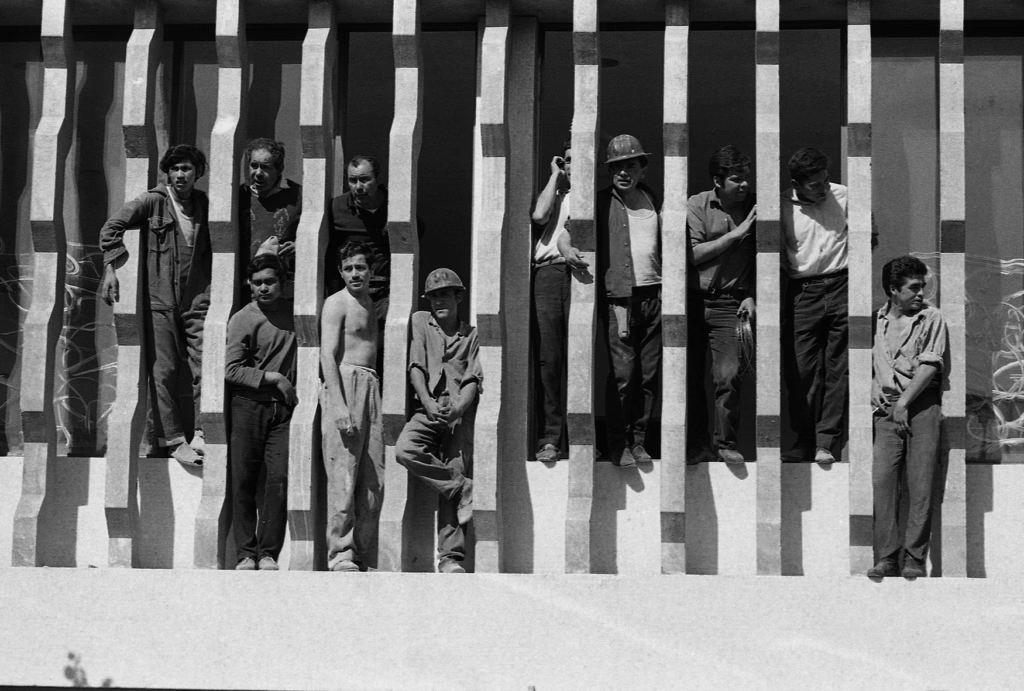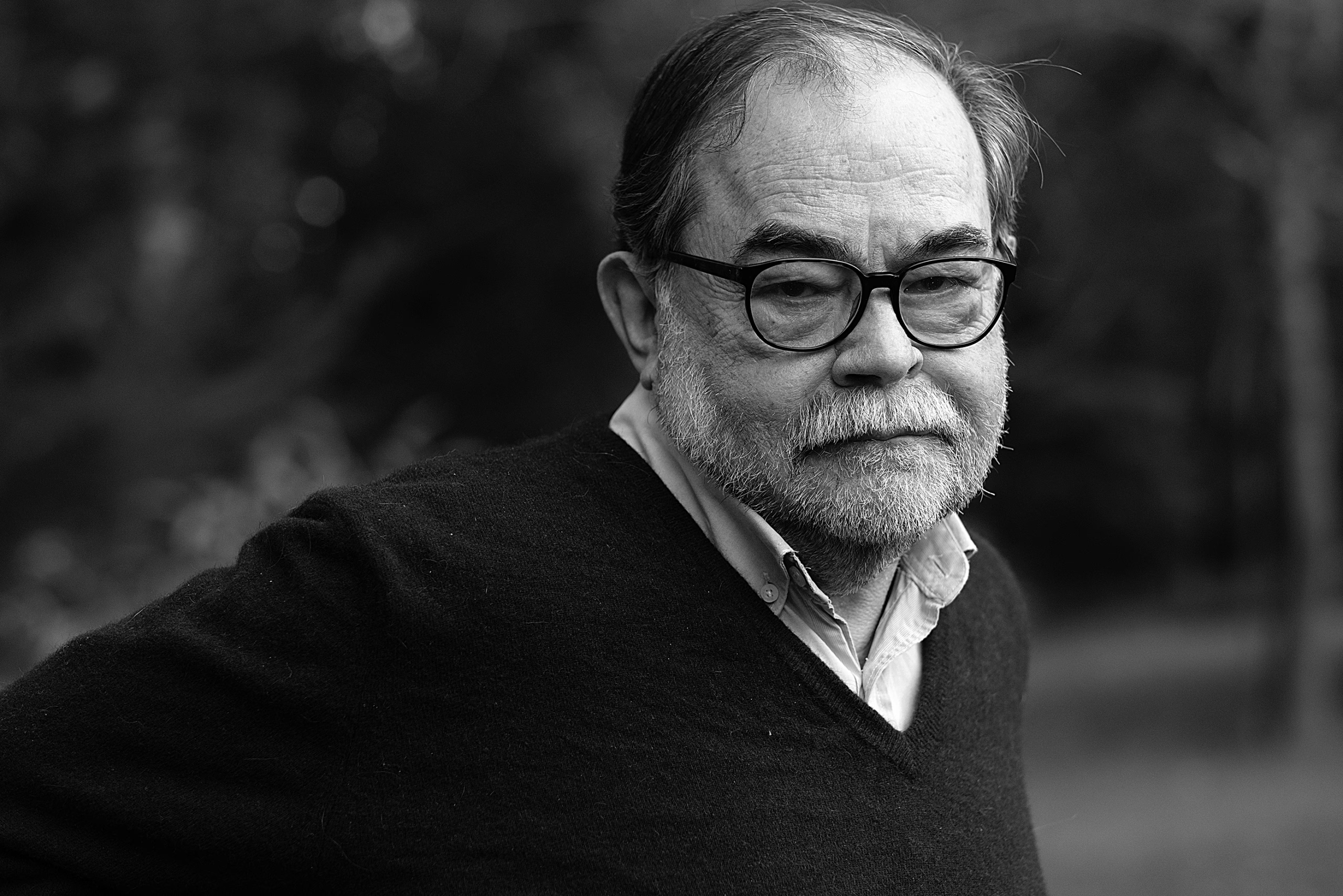
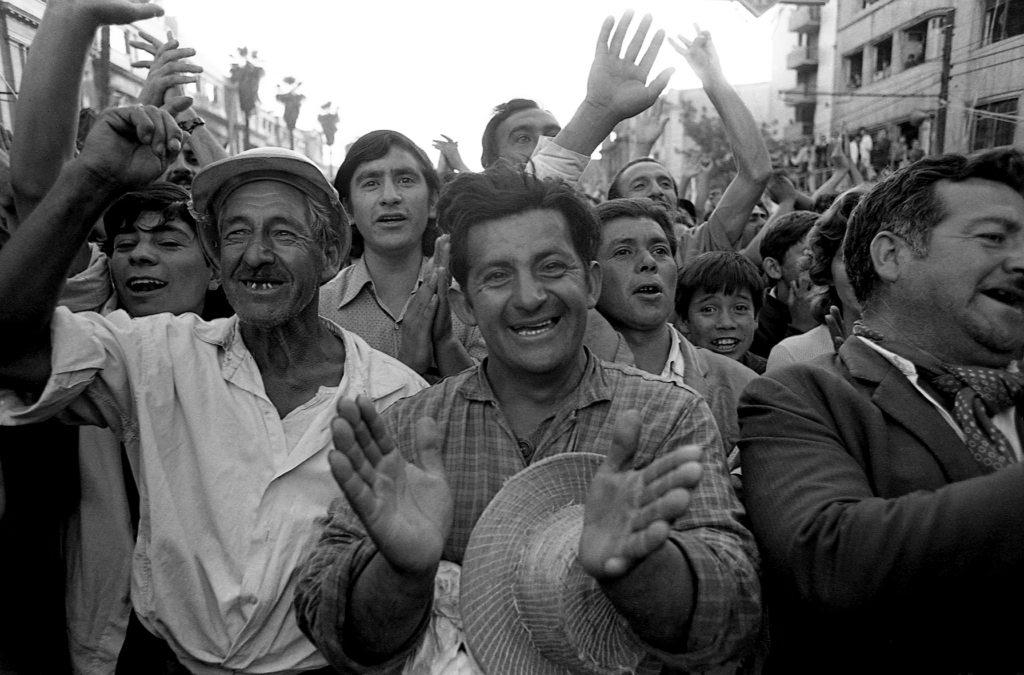
The photographer Luis Poirot accompanied Graham Greene on part of his tour of Chile in 1971. Here he writes of that time. Many thanks to Luis for sharing his memories and to Professor Richard Greene of the University of Toronto for drawing our attention Luis and his work. The photographs, embedded below, all by Luis, were taken around the time of Graham Greene’s visit.
A contextual point: the socialist politician Salvador Allende was democratically elected as Chilean president in 1970 only to be ousted from power in a CIA-sponsored military coup, led by General Augusto Pinochet, in September 1973; Allende committed suicide during the coup although the exact cause of his death continues to be disputed in some quarters.
Graham Greene wrote an article based on his 1971 visit entitled ‘Chile: The Dangerous Edge’; it appeared in The Observer on 2 January 1972, and in the March 1972 isse of Harper’s Magazine in March 1972.
This particular article first appeared in issue 83 (August 2020) of A Sort of Newsletter, the quarterly magazine of the Graham Greene Birthplace Trust edited by Mike Hill; it is reproduced here with all requisite permissions.
P
LUIS POIROT
Graham Greene in Chile
September has always been my favourite month. Winter is over and it seems that everything is getting better, days are longer and the sky is always blue. It is the month we celebrate the independence from the Spanish and it is always commemorated with many official acts and popular festivals.
It was 1971 and Salvador Allende’s government was commemorating its first anniversary, besieged from the beginning by Nixon’s government and the Chilean conservatives. Intellectuals, especially Europeans, visited our country drawn by this socialism and experience of freedom.
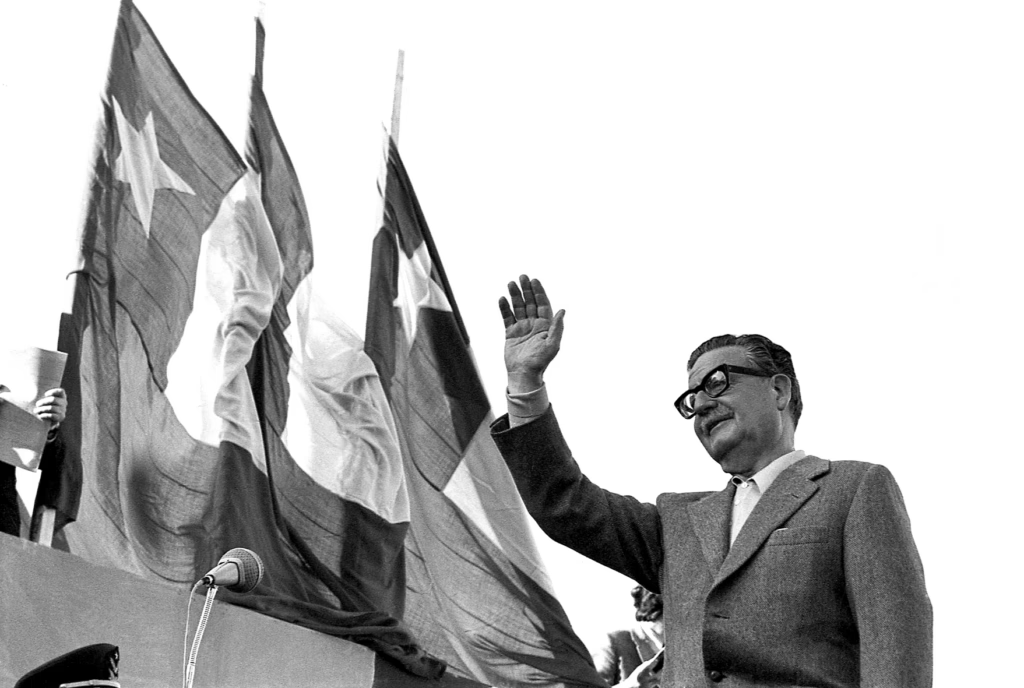
La Moneda, a colonial building and symbol of our democracy that houses the presidency, was also a public square and a road that was freely used to shorten the path between two streets. One of its yards, called Los Naranjos, was usually a meeting place for friends and lovers.
It was September 17, 1971 around noon and I was returning home located on the urban edge of that Santiago, after running some errands in the city centre. It was already warm and my car was parked a couple of blocks from La Moneda. Upon entering the first patio, the one with the cannons, I saw Payita (Miriam) Contreras, Salvador Allende’s private secretary, come down from the presidential offices.
Payita: ‘Hi Lucho, do you have anything to do right now?’ she said in a shaky voice. ‘Could you go to the airport to receive the writer Graham Greene who will arrive in an hour from Buenos Aires?’
Me: ‘But Payita, I am an anonymous citizen who doesn’t hold any position in the government.’
Payita: ‘It doesn’t matter, all the Foreign Relations officials are busy with the diplomatic delegations that have come to the Independence celebrations and only now did we know about his arrival. You will be the president’s personal representative and would welcome him on his behalf, then you will take him to the Hotel Carrera where we have made reservations. That’s where your assignment ends.’
I was overwhelmed.
I left to the airport in my mother-in-law’s red Austin Mini. The Ambassador’s Aston Martin and his driver were already there, at the illustrious visitors’ sector of the track. My English has never been very fluent and since Graham Greene had been living in France for years, I welcomed him in French, which is almost my native language. Already in his room and while I was waiting for Payita’s call to free me, he opened his suitcase and took out an old teddy bear that he placed in the middle of the bed, and a bottle of whiskey that he put on the nightstand. Although I did not have a camera, I mentally took a picture of the moment, which remains in my memory until today.
Me: ‘Why are there so few portraits of you?’
It was the beginning of the dialogue.
G.G: ‘I don’t like photography and portraits even less. I never recognise myself in that image, I see myself different. I also don’t like children; I think they are very noisy.’
All of this was said in a soft, polite voice. Fortunately, I had not revealed my true profession and the attraction that portraits had for me, I only spoke vaguely of my career as theater director, which was not a lie, but rather concealment of an important part of my life.
After an hour of pleasant conversation, rather an interrogation to which he submitted me about the situation in the country, Payita’s call came, but not to free me.
Payita: ‘Lucho, could you please cross the street and come with him to La Moneda? Allende wants to greet him now.’
I went to La Moneda and became a French interpreter in the conversation that Graham Greene and Salvador Allende had, that lasted more than one hour and of which I don’t remember a thing. I felt that the conversation did not concern me, just like a couple of years later in Paris I had to translate the conversation between Carlos Altamirano [Chilean lawyer and socialist politician] and François Mitterrand. At the end, Allende commissioned me to take him to the Cathedral the next day to attend the Te Deum ceremony, where members of the State and all religious believers attended, and added that the following day I must take him to the Military Parade, which was supposed to represent the obedience of the armed services to the civil power and where the celebrations would finally end.
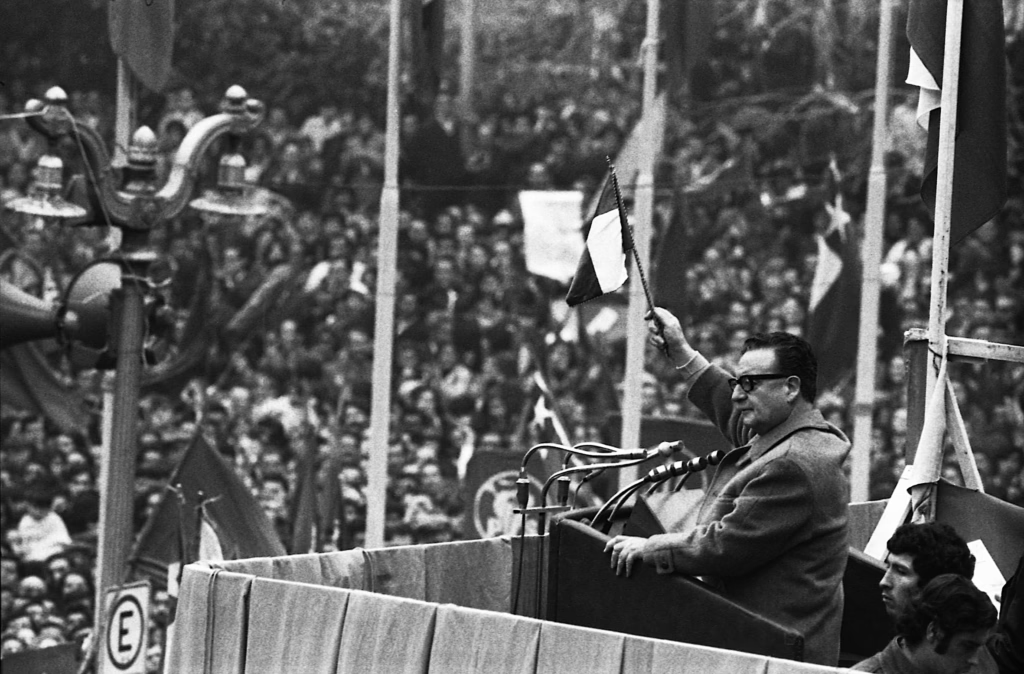
And there I was, on September 18 a national holiday, at the Cathedral in front of the president and authorities, with a borrowed tie that made me uncomfortable, answering the writer’s questions.
I will not forget the observation he made about the president of the Senate Patricio Aylwin.
He said: ‘I do not like this man, he is not to be trusted.’
After the ceremony, the place was quickly empty, we were left alone and I did not know where to take him.
Me: ‘Mr Greene, you must be tired of eating in hotels and restaurants. Would you like to have lunch at my house and learn a little about daily life in our country?’
GG: ‘I would be delighted’ was his immediate response.
September 18 at noon in Santiago was tricky, there were no taxis and there was no other alternative than, like most regular citizens, take the public bus (micro) that was always crowded. Graham seemed to be having a great time, and after a half an hour’s ride we reached my house.
After the initial surprise, my family welcomed him without further ceremony. After coffee he took a book from the shelf, the Spanish edition of The Living Room and wrote a note thanking me for making his visit ‘friendly and not official’.
Surrounded by official black cars we arrived at the Parade the next day in the little red Mini, from which he got out, not without difficulty. I did not ask him what he thought about all the Prussian ceremonial and military uniforms during that long and hot afternoon.
The next day, a deputy was appointed to accompany him on his tour to the copper mines in the north and the coal mines in the south.
Later I would read his extensive chronicles in The Observer, where he affectionately referred to those miners with whom he had been taken down the pits. He also talked about the distrust of the Christian Democrats and made an enigmatic final comment in which he expressed that our experience of socialism with human face had a ‘sporting chance to win’.
In 1973 we spoke briefly on the phone as I came to Paris in exile and he was living in the south.
I don’t have paper photos of his stay, but have that image in my head: the hotel, the teddy bear and a Cutty Sark bottle.